Featured

Research and it’s purpose

1. What do you think ‘research is’ ?

Research is a way of gaining deep knowledge in something and proving it with real facts and data. It is a way to solve a problem which we always wanted to know the solution. Sometimes it can lead to failure, but at the end of research it will lead us to a conclusion which can pave way to new research topic(s). Research can be done in any area like medicine, engineering, space, matter, education, etc.

2. Do you think you will ever need research skills?

Yes, having research skills can change our approach towards the way we think or solve a problem. With more research we will discover our skill, increase our speed in analyzing and gathering information about a research area. Life itself is a research, we start researching about each things from the day we are born.

3. What do you think a research journal is and who is it written for?

A research journal is a list of findings and proofs about a topic. This journal will be sent for peer review to suitable leaders who have experience in the topic. It is necessary to get the research approved by them in order to proceed with journal publishing. A published journal can be confidential or accessible to public based on the content of the research.

4. What is plagiarism?

Plagiarism means an unethical or dishonest way to create a work by copying someone else’s work which was already watermarked or licensed. Plagiarism can be checked online by the help of various online tools like iThenticate, etc.

5. Why is it important to avoid it?

It is essential to avoid using the method of directly copying someone’s work as it is considered illegal or non acceptable practice in various research fields and study. It is indirectly true that we all are influenced by someone else’s work or achievements, but it is not the right way to just follow or copy those people’s work. Each person or individual has different thinking capability, so making law against plagiarism is essential way to develop new and unique research ideas. This can also be considered as a way of teaching people to give importance and respect to other people’s handwork.

Research -Reflection

Research is a wonderful course because I can look at rigorous research practises and base my research skills on them. I could study further and use it in my future professional practise, as I am learning from the research method.

The course helped me analyse the essence of science, including the origins of discrimination and ethical considerations, and examine the research process objectively. I was also able to analyse and demonstrate the source of research by critical assessment, and then to interpret and evaluate those evidence for further research. I have also been able to apply my understanding of the fundamental problems of research.

Exercise – Ethical behaviour

You find some good images on the web that would look good on your site.  You copy and paste them to your blog.

  • I think copying any image which is someone’s creativity without proper referencing is not ethical.
  • Copying images from some websites which offer free images which already have the right to be shared in public is ethical.
  • Copy and paste an image which has copyright can be done in ethical way by providing proper referencing and copyright information.

You are in a hurry to finish an assignment and you find the perfect explanation of a difficult concept on Wikipedia. You decide to copy it into your work.

  • Wikipedia is not a trustworthy source. At any moment, anybody can edit Wikipedia. It implies that any data that it holds may be theft, a work in progress or a simple mistake at any given time.
  • Better to use relevant data from google scholar or from college library.
  • Being hurry means the chances for collecting wrong data is high, so better to do it as early as possible to avoid unnecessary confusions and mistakes.

You are a medical researcher and you think you have discovered a new drug that cures lung cancer.  It worked well on mice although a few of them died of heart problems. You want to test it on people.  You recruit 100 lung cancer patients into your treatment programme. You don’t tell them about the new drug.  You treat 50 patients with usual drugs and 50 with the new drug to see which is better.

  • Conducting test on patients without informing them about the medicine details is against the ethics of medical clinical trials. In above case, some of the mice died after taking medicine, so it shows the side effect of the medicine. Without identifying and rectifying this defect it is not safe to treat patients. Thus usage of above drug on patients is against the ethics.
  • In some critical case, doctors allow patients to try any other medicine for testing purpose. I have dealt with same situation in real life when my uncle was effected with stage 3 of multiple myeloma. We heard about one ayurvedic medicine developed using tree barks and roots in northern part of India. So we went their and bought the medicine and tried it on my uncle with doctors consent as he was going into a sinking stage and his body was rejecting the cancer medicines. Surprisingly after giving the ayurvedic medicine uncle was showing tremendous change, he started responding to our talks and he even started taking food.
  • Human body is still a mystery. So in some rare cases we need to test the body with new medicines to see the result. But if the medicine which is to be tested showed very bad side effect then it is not fit to be tested on patients.

You are doing your PhD about drug abuse among students.  You interview 30 students about their drug use. You discover that one of the students is actually a fairly big time dealer and you report him to the police.

  • Based on the students perspective it is not ethical to report about the student to police. In order to take the interview the student might have signed an agreement that his details and answers reported by him won’t be disclosed to anyone.
  • In order to report this to police the interviewer can give information about the drug gang without disclosing about the student details. Eventually police will know about the drug dealers details and take necessary measures for it.

You are a researcher looking at the effect of violent computer games on children.  You recruit 20 children into your study. Over a month you regularly show them images of violence to see if it has an adverse effect on their behaviour.  One of the children becomes quite distressed each time and so you stop showing her images and drop her from the study.

  • The above research is clearly unethical. The above study is only focusing on the violence part involved in games. But there is a proper classification of games for children and adults. So this research with violent image is not ethical.
  • Study can be done without violent images. There are many study conducted on effect of computer games on children. It has proved that computer games can improve the logical and visual response speed of children. Children are like growing fruits of nature, a small impact on them will have larger effects on their behaviour. So any study based on children should be conducted in a proper ethical way.

You want to research how easy it is to hack into your organisation’s computer system by persuading people to divulge login and password details.  You recruit a small team to ring up key people in the organisation and persuade them to give either their own or their boss’s details.

  • It is not ethical to hack into some company by persuading a person to give away his/her login details.
  • The above study is ethical if the company is dealing with very confidential domain. So this type of hack drill can be conducted by the company’s cyber security team in order to identify what can make an employee give away his/her login details or details about the company. Thus a proper security measure can be taken against such real life situation in future.

You are doing an initial research in area of a town where many bars and pubs are located, to estimate the level of problematic social behaviour in the area. Your research is independent from the police, because you want to observe their behaviour as well. You observe both abusive and violent behaviour.

  • First of all it is a very risky research. The researcher can get into trouble if the situation becomes violent. This research is not against the ethics. In order to identify the depth of the behaviour surrounding the area, the researcher need to blend in with the situation to get a proper result for the research.
  • This research can be done in more ethical and safe way. By informing any trusted person from police or taking some trusted persons along while doing this research. Also this can be done by talking to some of the regular customers of the bar and pubs in that area.

Peer review in research area

Image result for peer review

I am writing peer review on Lisha ‘s area of interest as per her request. I can see that she is interested in Cryptography. Since she has done project based on this field during her Engineering study I strongly believe she has good knowledge in her research topic. Since I learned some basics about cryptography I was able to understand what she was focusing about. She is more interested in using Hash codes for securing data sent from one device to another their by keeping the authenticity and confidentiality of the information. She would like to do a paper based research in cryptography. She created ten constructive questions which will help to do her research. I think she is focusing more on implementing a new type of cryptography method for digital signature in data transfer. This area of research is highly demanding as new apps are being created day by day to transfer information. I strongly believe that if she can come up with a new and strong method of data encryption using networking tools, it can pave way to a good achievement in her career.

Broad research in area of interest – Drone life saver

Image result for drone ambulance

Short description of the area of IT that interests you

Path planning algorithms to send drones for ambulance, health care, delivery services.

Why is it interesting to you?

Drone technology is evolving at a fast pace. I have a deep interest in this field. I believe drone technology can be used for a wide variety of services. Example If a person is having a stroke and need a defibrillator and the person at a place where no vehicle can reach within a limited time, a drone can be used to deliver the device at a faster rate. Humans take more time to travel as they can create errors due to nervousness but implementing drone technology to deliver emergency material to the suffering people can have higher efficiency.

Three things you know about it

  • Drones are available in different sizes and shapes. Any modification or custom can be done to improve the drone’s efficiency
  • Presently many algorithms are already developed for drone navigation like path planning algorithm which uses shortest path to travel.
  • Drones can be controlled by cheap devices including smart phones and smart watches. Also, it can be attached to any vehicle and can be deployed within seconds in flight to do the action.

Three things you believe about it

  • Different types of cameras, sensors and thermal detector can be used in drones.
  • Battery power and time of flight is the main concern.
  • Modifying algorithms or developing algorithms for complicated drone operation can be a challenging task.

Three things you don’t know about it

  • How to create algorithm for controlling drones and sensors.
  • How to modify and improve mechanical part of drone motor.
  • Licensing and how to configure GPS tracker with drone.

Would you rather: Do something, Research it or Do both

I would do a deep research in this field and come up with a good conceptual idea and steps on how to implement it in real case. Need to understand algorithm concepts and how to modify it or improve it depending upon drone’s usage. Rather than doing a big design I would like to come with something small and reliable.

Academic papers:

·       Kumar, G. D., & Jeeva, B. (2017). Drone Ambulance for Outdoor Sports. 1(5), 6. http://ajast.net/data/uploads/14.pdf

·       Scott, J. E., & Scott, C. H. (n.d.). Drone Delivery Models for Healthcare. 8. http://hdl.handle.net/10125/41557

·       Kristensen, A. S., Ahsan, D., Mehmood, S., & Ahmed, S. (2017). Rescue Emergency Drone for fast response to medical emergencies due to traffic accidents. World Academy of Science, Engineering and Technology International Journal of Health and Medical Engineering, 11(11), 637-41.

·       DiFrancesco, J. C. (2018). U.S. Patent No. 10,137,047. Washington, DC: U.S. Patent and Trademark Office.

Identifying a possible project

  1. What types of drones are used for transportation of objects?
  2. How flying mechanism is adjusted in different types of drones?
  3. What type of drone controlling equipment is used presently and what are the possible rates involved in equipment?
  4. What types of sensors can be used in standard size drone? Also, how to reduce weight of sensors and cameras.
  5. How to make a drone resistant to water and wind during flight?
  6. How to improve the battery power of drone? Is it possible to come up with solar charging mechanism?
  7. How to gather and modify presently used path finding algorithm for drone?
  8. How to improve the speed and stability of drone while carrying health care equipment?
  9. What are the criteria to follow while testing a drone flight? 
  10. How to design a proper packing mechanism while drone is in flight?
  11. How to implement security measures to prevent the capturing of drones when it is used for transportation of goods and medicine?

·   From question 1 to 5 I can gather all the data by doing research on drones which are presently widely used for many activities. But getting the algorithm used pathfinding will be difficult and costly. Testing of drones can be done using smaller models of drones thus by reducing the cost for doing regression test.

·   Question 6: This needs a further deep research into solar and other nature friendly and reliable, fast and lightweight power solution.

·       Question 8 : By doing several tests with smaller versions of drones a proper result and solution to transportation efficiency of drone can be achieved.

Making a choice

Detailed description:

Drones can be used to transport health care medicines and accessories to remote areas and inaccessible areas. Example: In my native last year we were affected by massive flooding and land sliding which caused the causality level to thousands. In most of the affected areas, people were unable to get their necessary first aid medicines and accessories as there was no means of transportation available. Depending on helicopter service alone are a time consuming and expensive process. Here comes the necessity of high speed, cargo drones which can deliver the medicines to multiple locations in less time and with less power usage. Mostly developing countries like Africa and other places need a constant supply of medicine. Presently huge amounts need to be spent on transportation of common and cheap medicines to these areas using helicopters and trucks. But in some of the areas, it is not accessible for normal mode of transportation. So, healthcare drones can be used to overcome this highly arising issue. To develop a prototype, I need to spend more time on drone research and learn how to design, write an algorithm and implement better battery power technology. 

Possible Title: Med-Drone – Prototype unmanned health care transportation device.  

Ethical Issues

Because of my project is related to aerial transportation using drones, I will need to face some ethical issues like which area drone cannot be used, how secure is drone to people while it is in flight, will it create a security threat for the lives of people if it is reused by criminals for illegal activities.

IP

Like to do it as an open source project. But if I can come up with unique algorithm then I would like to implement copyright for the work.

Review on class blogs

This was one of the most interesting parts which I enjoyed. I went through everyone’s blog. Everyone has done their blogs in their perspective and some of them are excellent works. Below is the link to the list of blogs written by my classmates.

Albert – Aline – Arjun – Balaji – Brad – Destinnie – Dura – Jasvir – Lisha – Mahesh – Oleg – Reetinder – Shivangi – Sinhara – Silver – Zaihong – Zengning Marcellus

I found blog written by Aline to be way different from others. Her approach and method of writing is very interesting and eye catchy. I find she is more interested in architecture and history. She has explained the blogs with little humor along with professional writing technique. Her blog writing is a clear example of how a blog should be written for the readers.

Second blog I found interesting was written by Marcellus. He has a good manner of explaining each ideas in his own way. I found that he is more interested in virtual reality technology. I can see that he got the idea of implementing virtual reality as a new form of gaming from his previous interest in game development. He has a good way to point out the readers on what he is talking about in his blogs.

Third blog I found attractive is of Oleg’s. He is more expressive in his writing and answer to the question approach can be seen in his writings. He knows how to perfect his blog. He has an excellent professional approach and reading them is interesting and very easyily understandable.

Even though I am sure I am not the person fit to review or cross-check whether anyone’s blog is good or bad, from my perspective, I prefer Oleg’s blog to be the best among others.

Academic paper reading – Artificial Intelligence in Psychiatry, Psychology, and Psychotherapy

Article chosen – Ethical Implications of Embodied Artificial Intelligence in Psychiatry, Psychology, and Psychotherapy

APA Reference –

Fiske, A., Henningsen, P., & Buyx, A. (2019). Your Robot Therapist Will See You Now: Ethical Implications of Embodied Artificial Intelligence in Psychiatry, Psychology, and Psychotherapy. Journal of Medical Internet Research, 21(5), e13216. https://doi.org/10.2196/13216 , URL – https://www.jmir.org/2019/5/e13216/

Three things article talks about –

  1. Article talks about how artificial intelligence can be implemented or used in psychiatry, psychology and psychotherapy.
  2. Authors tried to give a overview of how non human interaction using AI instruments can improve or support the lives of people suffering from specific physical or mental conditions.
  3. Concludes by pointing out that AI should be included after based on proper medical standards, guidelines for mental health services. Trained professionals should be handling the AI devices using apps and bots. Develop different algorithms to monitor the patients behaviour and modify the AI devices to function according to the patients need. AI should be implemented after long term monitoring test is conducted in patients.

Research questions the authors were pointing to was how, when and why the need of AI devices can improve the patients to face challenges in a better way thereby increasing the self-confidence in the patients’ mind that they can do day to day thing without much help from other members.

Description about the article:

The authors have collected data about currently implemented AI robots and devices for medical use. They have excluded all the devices which do not interact with patients, focusing more on the bots and apps that is used for dealing with patients mental health. These application is implemented with interactive screen for patients. This applications have the duty to monitor the natural language used by patient for expressing emotions and to identify specific patterns expressed by patients during emotional expression. The motive of the research was to develop an AI tool which can reduce the depression and anxiety disorders in patients. Use of face like images to communicate with patients via tablets or touch screen can improve the patients suffering from fear of heights, suicide tendency, etc. Usually image bots with avatars are used for prevention education.

AI robot therapy – It mainly focus on using AI robots for treating the patients with disability disorders. Example of such robots used are Paro, Ebear, etc. Paro is a robot used and developed in Japan. It has sensors like light, posture, temperature. It is programmed with algorithm which note down the patients activity. When patient stroke the Paro seal it tries to mimic the moment which made the patient do the stroke. When patient hit on the seal it note down the moment it made the patient to hit on it and tries not to repeat that moment again. Children with ADS (autism spectrum disorders) have reacted to AI robots in better way than with real persons. Robot therapy is used in several fields for treating patients with mental disorders, fear disorders, sexual disorders, etc. Further and more in-depth analysis of the ethical and social implications of embodied AI is necessary in order to facilitate effective and sensitive development and medical transition into the area of mental health. When designing and building the next generation of AI agents or robotics for mental health, early detection of ethical issues will help scientists, architects, and engineers understand these questions. We also presented, from an ethical perspective, an overview of the advantages, threats and dangers of embodied AI in mental health.

Figure 1 : Shows how Woebot is used to interact with patient.

An analysis of the ethical and social aspects of currently embodied AI applications was carried out across the fields of psychiatry, psychology, and psychotherapy based on a thematic literature analysis and established principles of medical ethics. The research was organised around the following three measures to allow a thorough evaluation: evaluating potential benefits; examining broader ethical issues and concerns; addressing relevant ethical and social issues of interventions.

  • Specific guidelines must be given as to whether (and what) embedded AI systems must be subject to generic review for medical technology or regulatory approval. This should include a series of specific guidelines for the use of AI technology outside the oversight of a specialist in healthcare.
  • Professional mental health organisations must establish guidelines regarding effective use of AI for mental health services and suggestions for the training and preparation of young doctors for wider use of AI, including mental health models.
  • Mental health AI tools should be treated as a further resource in mental health services. These should not be used as a justification to decrease quality care by trained professionals in mental health and should be judged for their effect on the provision and use of the current mental health services.
  • Ideally, AI should be under the guidance of qualified mental health professionals in order to fulfill their treatment and risk monitoring responsibilities. Other software presented outside the scope of mental health, such as smartphones or bots, must provide accurate risk assessment and referral pathologies.
  • A practical use of Embodied AI. Instructions on how to execute technologies in such a manner that the client is independent should be created, such as when and how approval is necessary and how insecurity, exploitation, intimidation and confidentiality is best addressed.
  • Mental health AI systems, for instance, have to be tested for discrimination. Ideally, the function of algorithms used in different applications they could use and suggest use should be explained to their clinicians and algorithms such as these should be made publicly available for review and creation.
  • Improved use of embedded AI should be followed by research that explores both direct and indirect therapeutic impacts, including human-human relationships and individual self-awareness and identity results. It needs to be monitored for the long-term effects, r from the reduction of health status to increased objectification.

Week – 7-Narcissist approach

The IT area/subject I have most enjoyed is ….

Database design and fundamentals

The IT area/subject I least enjoyed is…..

System security

The IT area/subject I was most interested in is……
Database warehouse design

The one IT thing I never want to have to do again is…………..

Software Testing.

I chose to study IT because I  …….

IT is the fastest growing industry on the planet. So I like to be a part of it.

If I couldn’t study IT I would study………..

Biotechnology and Genetic engineering.

When I was a kid I wanted to be………………..
Astronaut

One IT thing I would like to know more about is   ……..

Artificial intelligence in the field of medical treatment like identifying cancer and early symptoms of severe diseases.

An understanding about Meta Analysis

Chosen elements of the summarized results of basic studies with similar patterns are embedded into a database, and this data is “meta-analyzed”. It is like creating a new Elixir by studying and analyzing every collected data and pointing out the deformities in each study first and later removing them to and combine only the best part of it to form a new research data.

Meta-analysis is done in most almost all areas of study. In the medical field, it involves the study of drugs and effects on patients. These drugs must be having similar elements but it might be having a different effect on different patients. So identifying the side effects caused in different patients one can create a better drug which will have reduced side effects. This kind of study can also be used to prevent any adverse effects on a currently used medicine.

The main problem of meta analysis is that it can result in creating invalid research data if the user is researching or analyzing several data with errors in it.

In software, meta analysis is done mainly on the statistical analysis. In IT Meta analysis is done in creating new apps, softwares, games etc. Example Facebook was created by doing meta analysis of social media softwares like Orkut, Google plus, etc.

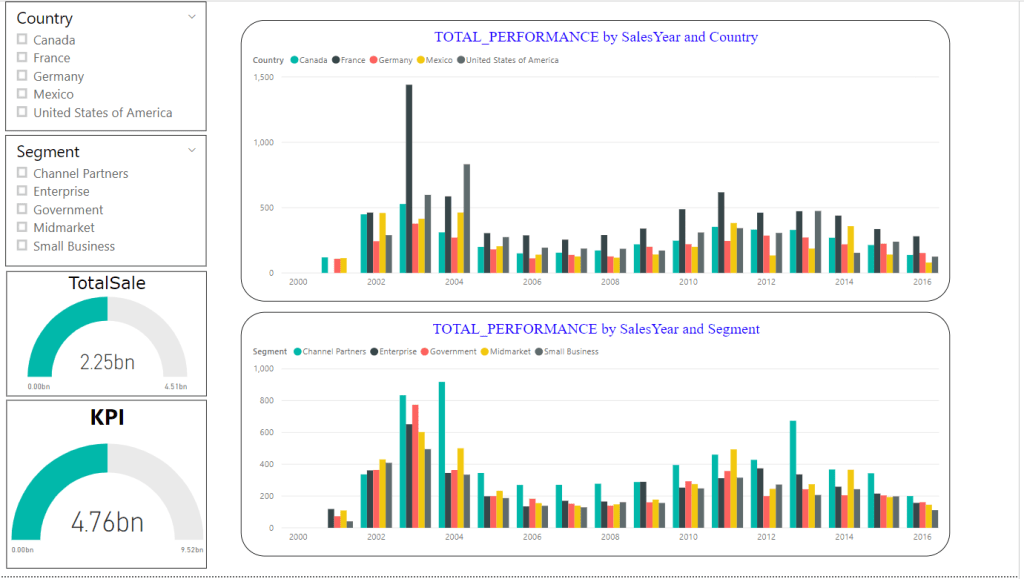
I did meta analysis using the details I gathered from a company’s finance database. I created one SQL query to combine several tables in Finance DB to analyse the performance of the company for certain year. Using Power BI tool i was able to do meta analysis of the data i collected as shown below.

One software which I came across for doing meta analysis in excel is “Mix 2.0” .

Evidence about computational thinking and Virtualization Technology

Computational Thinking

1.Journal

  • URL – https://royalsocietypublishing.org/doi/abs/10.1098/rsta.2008.0118
  • Search key term – journals based on computational thinking
  • Found it from – Google Scholar
  • Created by – Jeannette M Wing
  • Published on – 31 July 2008
  • Type – Article
  • Credibility check – Article is cited by around 1073 people. Published in the Royal society website.

2.Blog

  • URL – http://blog.sparkfuneducation.com/what-is-computational-thinking
  • Search key term – blogs about computational thinking
  • Found it from – Google search
  • Created by – Megan Hemmings
  • Date of publishing – 22 January 2019
  • Type – Blog
  • Credibility check – Author has explained about computational thinking in a simpler and interesting way.

3.Video

  • URL – https://www.youtube.com/watch?v=qbnTZCj0ugI
  • Search key term – videos about computational thinking
  • Found it from – YouTube
  • Created by – Paxton/Patterson
  • Date of upload – 9 May 2018
  • Type – YouTube video
  • Credibility check – Has more than 20,000 views with likes. Have done explanation about topic in a simpler and interesting manner.

Virtualization Technology

1.Journal

  • URL – https://ajet.org.au/index.php/AJET/article/view/873
  • Search key term -virtualisation technology
  • Found it from – Google Scholar
  • Created by – Heng Ngee Mok, Yeow Leong Lee, Wee Kiat Tan
  • Published on – 28 February 2012
  • Type – Article
  • Credibility check -Published in Australian Journal of Educational Technology. Explains how to setup lab management using virtualization technology.

2.Blog

  • URL – https://www.znetlive.com/blog/virtualization-in-cloud-computing/
  • Search key term – blog about virtualization in technology in cloud
  • Found it from – Google search
  • Created by – Bhupender
  • Date of publishing – 17 June 2016
  • Type – Blog
  • Credibility check – Author has explained about hardware and network virtualization.

3.Video

  • URL – https://www.youtube.com/watch?v=zLJbP6vBk2M
  • Search key term – about virtualization in technology
  • Found it from – YouTube
  • Created by – Eli
  • Date of upload – 3rd FEB 2012
  • Type – YouTube video
  • Credibility check – Has more than 799,062 views with 8.5 k likes. Have done explanation about topic in a simpler and interesting manner.

Scientific Paradigm

The word “Paradigm” means a certain pattern or way of thought. The word paradigm has its origination from the Greek word “paradeigma” meaning pattern.  A paradigm can be described simply as a system of belief or a theory that guides the way we do things, or more formally establishes a set of practices. A paradigm can also be defined as a general perspective, a way of breaking down the complexity of the real world. This word was first used in the research by “Kuhn” in 1962 to describe a conceptual framework that is accepted by a community of researchers or scientists and that deeply guides them while conducting the research.

Paradigms or in other words “shared understandings of reality” guide how we make decisions and carry out research. Research paradigms have strongly influenced and still continue to influence the theoretical development in the fields of educational communications and technology.

In educational research the term paradigm is used to describe a researcher’s ‘worldview’ or to say it more precisely, a paradigm is the lens through which a researcher looks at the world.  By worldview we mean, the perspective, or thinking, or school of thought, or set of shared beliefs, that informs the meaning or interpretation of research data. When we say that it defines the researcher’s worldview, we mean that a paradigm constitutes the abstract beliefs and principles that shape how a researcher sees the world, and how s/he interprets and acts within that world. In this manner, paradigm is the conceptual lens through which the researcher examines the methodological aspects of their research project to determine the research methods that will be used and how the data will be analysed.

Every research uses one of the research paradigms to use as a guideline for developing research methodology and to take on the research venture in a manner that is most valid and appropriate.

Impact of chosen paradigm on research

A research paradigm is closely connected to the research. It should be aimed to have a good understanding of paradigm development while planning a study as it can shape the search for understanding and such an evolutionary development reveals the researcher with a choice of paradigms to consider regarding the manner in which research can be undertaken and the search for understanding is achieved. A chosen paradigm will have a huge impact on the underlying research. Which means in a research, in order to understand the research trainees and their learning, beliefs or behaviours, we have to be aware of their experience and culture, and recognise that they do not just potentially see the world differently to us, but experience it differently too. Sometimes the argument may arise that research is carried out within a particular paradigm, however researchers should be keep in mind that paradigms seriously affect their research methods and findings. Moreover, researchers should be also flexible to alternative theories and paradigms because new developments often arise at the interface between paradigms.

It is therefore very important, that while writing a research proposal , we have to clearly state the paradigm in which we are locating our research.

Elements of a Research Paradigm

A research paradigmcomprises of four elements namely

  • Epistemology – How do you know if something is real?
  • Ontology       – What is reality?
  • Methodology – How do you go about finding out the reality?
  • Axiology      –  The Theory OValue

It is important to have a firm understanding of these elements because they comprise the basic assumptions, beliefs, norms and values that each paradigm holds. Therefore, in locating our research proposal in a particular research paradigm, the understanding is that our research will uphold, and be guided by the assumptions, beliefs, norms and values of the chosen paradigm. It is therefore important that we demonstrate that we know what each of these elements mean.

Epistemology of a Paradigm

The origin of the word Epistemology is from the  Greek word “Episteme”, which means knowledge.

Epistemology can be defined as the study of the nature of knowledge and justification. Put simply, in research, epistemology is used to describe how we come to know something; how we know the truth or reality; what counts as knowledge within the world. It is concerned with the very bases of knowledge like its nature, forms and how it can be acquired, and how it can be communicated to other human beings. It focuses on the nature of human knowledge and comprehension that we, as the researcher or knower, can possibly acquire so as to be able to extend, broaden and deepen understanding in our field of research.

To understand the epistemological element of our paradigm, we should ask the very important question of how we know what we know? This question is the basis for investigating ‘truth’. And so, in considering the epistemology of our research, we might arrive at questions seeking investigation of the “truth”. And such questions are really important because they help the researcher to position themselves in the research context in a way for them to discover what else is new, given what is known.

If factual evidence is taken as truth, then epistemology helps us to ask factual questions, such as how do we know the truth? What counts as knowledge? These are particularly important questions because one of the criteria by which higher degree research is judged is its contribution to knowledge. Researchers can draw the answers to the above question from the four sources of knowledge namely intuitive knowledge, authoritative knowledge, logical knowledge, and empirical knowledge.

  • Intuitive knowledge- If we rely on forms of knowledge such as beliefs, faith, and intuition, then the epistemological basis of our research is Intuitive knowledge.
  • Authoritative knowledge – If we rely on data gathered from known people, books, leaders in organisations, then our epistemology is grounded on authoritative knowledge.
  • Logical knowledge – If reasoning is emphasized as the surest path to knowing the truth, then this approach is called rationalist epistemology or logical knowledge.
  • Empirical epistemology – Putting emphasis on the understanding that knowledge is best derived from sense experiences, and demonstrable, objective facts, means that our approach leans towards empirical epistemology

Epistemology is important because, it helps us to establish the faith we put in your data. It affects how we will go about uncovering knowledge in the social context that we will investigate.

Ontology of a Paradigm

Ontology is knowing the reality which may also be something that we intend to prove or our perspective of the reality. It is the philosophical study of the nature of existence or reality, of being or becoming, as well as the basic categories of things that exist and their relations. It examines our underlying belief system as the researcher, about the nature of being and existence. It is concerned with the assumptions we make in order to believe that something makes sense or is real, or the very nature or essence of the social phenomenon we are investigating. It helps us to conceptualise the form and nature of reality and what we believe can be known about that reality.

Ontology enables us to examine our underlying belief system and philosophical assumptions as the researcher, about the nature of being, existence and reality. Philosophical assumptions about the nature of reality are crucial to understanding how we make meaning of the data we gather. These assumptions, concepts or propositions help to orientate our thinking about the research problem, its significance, and our way of approach to answer our research question, get to the root of the problem under investigation and reach a solution.

Ontology helps researchers in recognizing the certainty of the nature and existence of objects they are researching. Ontology is so essential to a paradigm because it helps to provide an understanding of the things that constitute the world. It seeks to determine the real nature, or the foundational concepts which constitute themes that we analyse to make sense of the meaning embedded in research data.

Methodology of a Paradigm

Methodology refers to the procedure used to acquire the knowledge. In other words, it is the broad term used to refer to the research design, methods, approaches and procedures used in an investigation that is well planned to find out something. For example, collection of data, participants, devices used, and data analysis, all belong to the broad field of methodology. More precisely, the methodology defines the logical flow of the systematic processes followed in conducting a research project, leading to gaining of the knowledge about a research problem. It includes assumptions made, limitations encountered and how they were mitigated or minimised. It focuses on how we come to know the world or gain knowledge about part of it.

Axiology                                            

Axiology refers to the ethical issues to be taken into consideration during planning of a research proposal. It considers the philosophical approach to making decisions of value or the right decisions. It involves defining, evaluating and understanding concepts of right and wrong behaviour relating to the research. It considers the value addition that we may make to the different aspects of our research, the participants, the data and the final audience to which we shall report our research results . Put simply, it addresses the question: What is the nature of ethics or ethical behaviour? In answer to this question, it is important to consider our regard for human values of everyone that will be involved with or participate in our research project.

Axiology is best guided by four criteria of ethical conduct namely

  • Teleology – The theory of morality which postulates that doing what is intrinsically good or desirable, is a moral obligation that should be pursued in every human endeavour. And so, teleology refers to attempts made in research to make sure that the research results in a meaningful outcome that will satisfy as many people as possible
  • Deontology – Deontology is the understanding that every action that will be undertaken during the research will have its own consequence, intended to benefit participants, the researcher, scholastic community or the public at large
  • Morality – The morality criterion refers to the intrinsic moral values that will be upheld during the research. For example, that the researcher will be truthful in their interpretation of the data.
  • Fairness – The criterion of fairness draws the researcher’s attention to the need to be fair to all research participants and to ensure that their rights are upheld

Conclusion

To conclude, a research paradigm is the set of common beliefs and agreements shared between scientists about how problems should be understood and addressed. The paradigms namely epistemology, ontology and axiology, exert significant influences on the methodology to be used in a research project. Since each paradigm is based upon specific assumptions, choice of a paradigm for our research implies that the research will be nested in a particular epistemology, ontology, and axiology, and that these elements will therefore guide us towards a particular methodology. Thus, the choice of a paradigm implies a near certainty about particular methodologies that flow from that paradigm. This relationship is very important because the methodological implications of paradigm choice forms the framework for the research question/s, participants’ selection, data collection instruments and collection procedures, as well as data analysis. Thus, research located in any of the four primary paradigms has a wide range of research methodologies to choose from. Lets also remember the point, that it is quite possible to combine several research methodologies within a single research paradigm. However, choice of the right methodologies needs to be informed by a good understanding of the different aspects of research paradigms.

Design a site like this with WordPress.com
Get started